


This post is also available in:

The Cuban Mojito, perhaps the most popular among the country’s classic cocktails, descends from an old drink marked by the legend of the most fearsome English privateer of the late sixteenth century: Francis Drake.
With its innocent name and exquisite flavor, the Mojito gives little hint of its ancestor. That earlier drink was rather barbaric—not only because of the violent environment in which it was born, but also due to its rough ingredients: crude aguardiente (sugarcane liquor), raw sugar, lime, and mint leaves—and of course, without the soothing touch of ice. By consuming that mixture rich in vitamin C, Francis Drake sought to prevent his sailors from succumbing to scurvy.
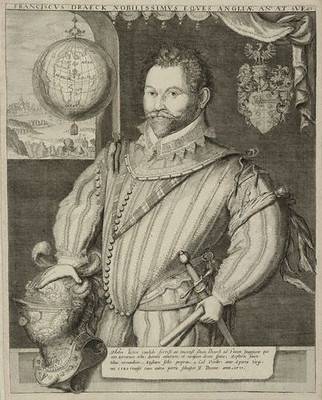
The English raider—according to historian Fernando Portuondo—“helped revive Cuba’s declining colony. In anticipation of the attack by the famous privateer, Havana was fortified and garrisoned, drawing renewed attention from the Spanish government. The castles of El Morro and La Punta,” historian Irene A. Wright has said, “stand as monuments to Sir Francis Drake.”
Alongside those iconic works of Cuban cultural heritage, one might well add the no less emblematic Mojito.
Originally known as the Draque—adapted to Spanish and in honor of its legendary creator—this beverage was consumed in Cuba until the nineteenth century, as both a cure for certain ailments and, apparently, simply for pleasure.
Between the 1860s and 1870s, in the cellars of Facundo Bacardí in Santiago de Cuba, a light rum of unprecedented quality was born. Bacardí and other fine Cuban rums that followed encouraged locals to enjoy them neat. However, the ancient “Drakean” tradition did not entirely disappear. When aguardiente was replaced with these refined spirits, the formula became smoother and more flavorful; it was then that the drink began to be called Mojito, according to Gustavo G. Campoamor in his Biography of Cuban Rum.
The name Mojito likely comes from an essential seasoning in traditional Cuban cuisine: the Mojo, prepared with lime juice and crushed garlic.
The Emergence of the Contemporary Cuban Mojito
The social debut of the modern Cuban Mojito is believed to have taken place at the Hotel Sevilla during a reception—though instead of using yerbabuena (Mentha sativa), what Cubans call mint was used.
Meanwhile, in the manual “Do You Know How to Make Cuban Cocktails?”, professor Ángel Alvarado states that around 1930, the recipe “appeared at La Concha resort on the beaches east of Havana, and also at El Floridita.”
It was Ángel Martínez, founder of La Bodeguita del Medio in 1942, who added sparkling water and began preparing it directly in the glass, muddling the mint stem—according to Alvarado.
Whether it was already popularly known as the Mojito or whether the name truly spread after its revival at La Bodeguita matters little. What is certain is that it reached full stardom there, becoming the best seller of a world-renowned bar-restaurant.